Disclaimer: I used ChatGPT to help clean up this article. The thoughts and original paragraphs are mine. I used the tool to improve the sentence structure, spelling, and punctuation because those are not my strongest areas as a writer. My teacher wife is currently rolling her eyes and agreeing 100% with that statement.
I am not publishing a book or pretending this is a scholarly article. It is simply a blog post sharing my thoughts at this moment. I used a tool to help make those thoughts easier to read. If that bothers you, feel free to stop reading and move along. No hard feelings. Now on to the the blog post.
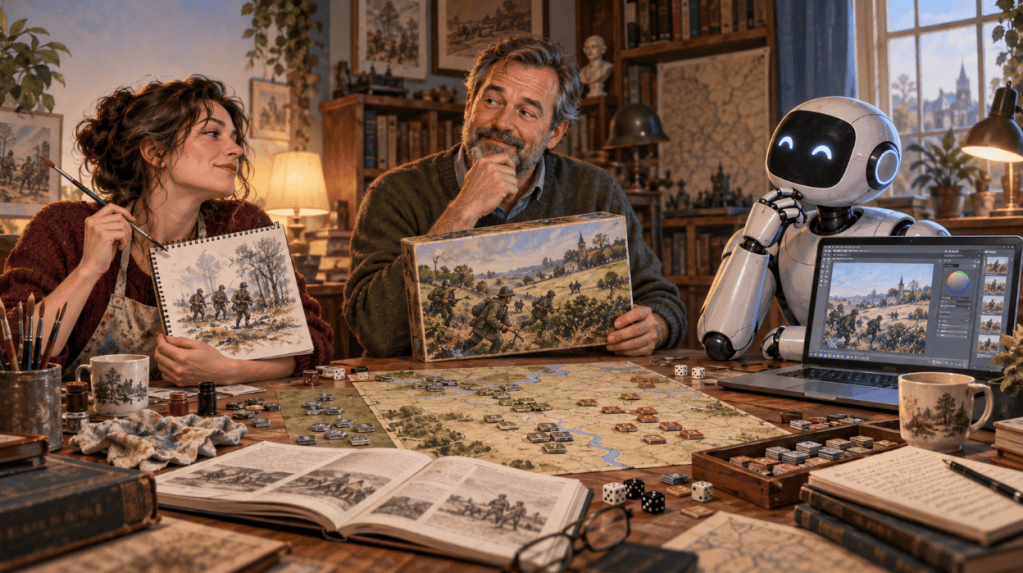
Mention AI in a wargaming group and the conversation can turn hostile faster than a cavalry charge. Some see it as a useful tool for writing, research, artwork, and content creation. Others believe it has no place in a hobby built on history, creativity, and human craftsmanship. The debate has become so heated that people are often judged before anyone bothers to ask how the technology was actually used. So why does AI create so much anger in the wargaming community, and is all of that anger justified?
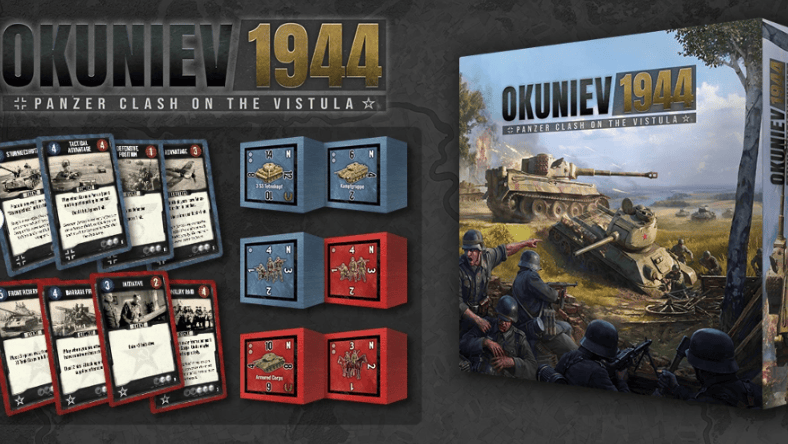
It has come to my attention that the AI debate really gets some folks fired up. I was scrolling through a Facebook group when a game designer posted an ad for his new game. The box cover featured AI-generated artwork, and people immediately started losing their minds. You would have thought he had replaced every counter sheet with a QR code.
I understand why some people were disappointed. When we buy a game, we want to support the artists, designers, and creators who bring it to life. There were also components inside the box that appeared to be AI-generated, which added even more fuel to the fire. I get it, and I can honestly see both sides of the argument.
Let’s start by looking at it from the designer’s side.
Designing and publishing a game is not cheap. Between research, development, playtesting, printing, shipping, marketing, and all the other expenses that seem to crawl out of the woods, the costs can pile up quickly. Many wargame designers are not working with huge budgets or large publishing teams. In some cases, it may be one person trying to turn an idea into a finished game without taking out a second mortgage.
Hiring an artist to create original artwork can be expensive, especially if the game needs a box cover, cards, counters, maps, player aids, and promotional material. For a small independent designer, AI might look like a practical way to keep the project affordable and get the game onto the table. That does not automatically make every use of AI acceptable, but it does help explain why some designers are turning to it.
Some people say designers who use AI are cheating or simply being lazy. But let’s take a closer look at that argument.
Most game designers rely on a variety of tools to bring their ideas to life. They read books, study articles, search historical records, use the internet, and work with design software. Very few people create a game using nothing more than a pencil, a stack of paper, and a heroic amount of free time. Using tools has always been part of the creative process.
I remember when desktop publishing software first became widely available. Suddenly, people could create magazines, books, newsletters, and other publications without relying on traditional typesetting and printing methods. The process became faster, less expensive, and available to far more people.
Of course, the purists lost their minds.
They argued that desktop publishing was destroying the craft and lowering the quality of printed material. To be fair, some of those early publications looked like someone had discovered 37 new fonts and felt obligated to use every one of them. Still, the technology opened the door for independent writers, designers, and small publishers who might never have had the money or connections to publish their work.
AI may be another version of that same argument. It is a new tool that makes certain parts of the creative process faster and more accessible. That does not mean it should replace human talent, nor does it excuse poor-quality work. But using a tool does not automatically make someone lazy. The real question should be how the tool was used and whether the final product is worth putting on the table.
When it comes to the artwork, I am sure most graphic artists use some type of digital tool to create the finished image. They may begin with a sketch or develop the original concept by hand, but many use software to clean it up, adjust the colors, add effects, and prepare it for printing. These tools help artists work more efficiently and create professional artwork at a price a small publisher can afford.
I also see plenty of games that use historical photographs, paintings, or prints for their box covers. I think that can work beautifully, and some of those covers are among my favorites. A well-made AI image could also serve that purpose. If it is accurate, fits the theme, and has been carefully reviewed for the usual AI oddities, it may create an effective and affordable cover. After all, nobody wants to discover a cavalry officer with seven fingers or a tank with three tracks after the boxes have already been printed.
The artwork does not always need to be created entirely from scratch to capture the setting and draw you into the game. Sometimes the right image, whether it is a historical photograph, a classic painting, or a high-quality AI creation, tells you everything you need to know before you even open the box.
To wrap this up, these are my thoughts and mine alone. I know plenty of people will disagree, and some will have strong opinions or feedback. That is perfectly fine. Good conversations can come from disagreement, as long as everyone remains respectful and avoids personal attacks.
If you see that AI was used in a project and that bothers you, the answer is pretty simple. Do not read it, buy it, or participate in it. Spend your time and money supporting the creators whose work matches your values. Just remember that disagreeing with someone’s choice does not give you permission to attack them personally.
We can debate the use of AI without declaring war on everyone who sees it differently. After all, this is wargaming. We should save the battles for the tabletop.




Leave a comment